Self-assembling protein architectures
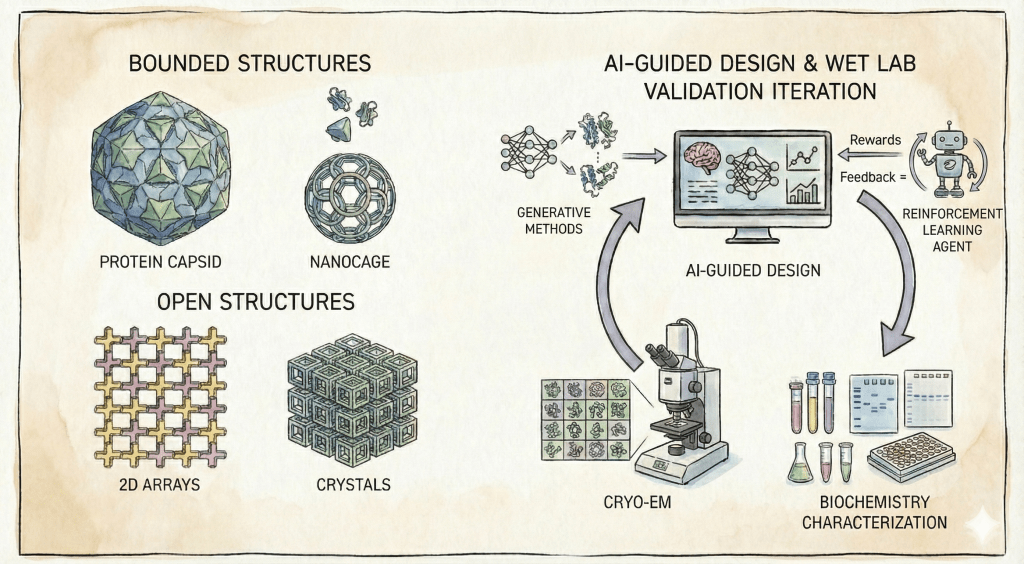
We are broadly interested in how proteins self-organize into functional architectures and in developing new rules and methods to inverse-design them. Our lab studies the mechanisms of cooperative assembly, symmetry breaking, and emergent behavior in protein systems, and uses these insights to create structures that assemble not only in vitro but also inside living cells. We integrate AI-driven computational design with biochemical, biophysical, and cellular approaches. The goal of our work is to build precisely engineered protein materials that enable new therapeutic strategies in gene editing, cell engineering, and tissue repair.
Designer non-viral delivery vectors
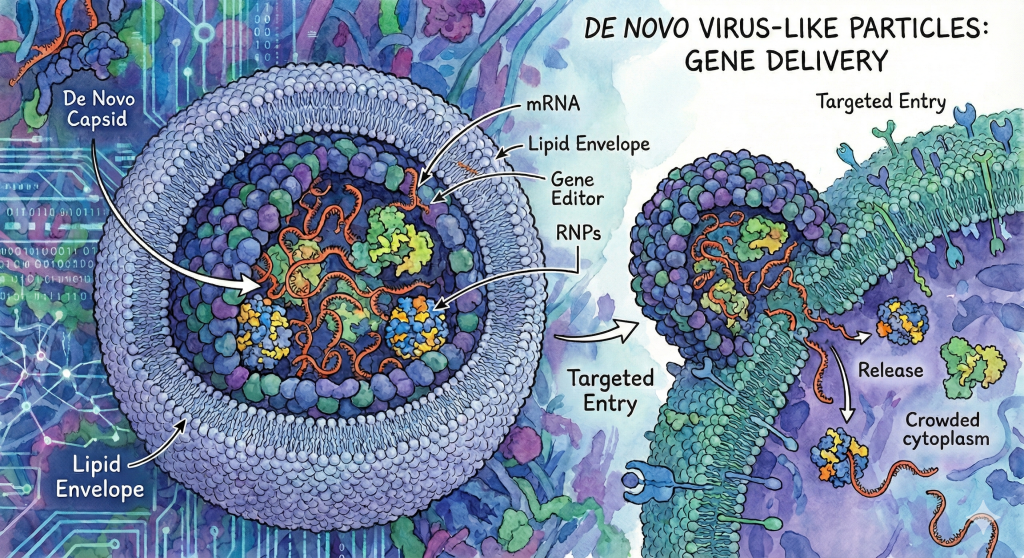
Safe and efficient delivery remains the bottleneck for nearly all gene and cell therapies. Natural viral vectors are powerful but limited by safety concerns, fixed tropisms, cargo-size constraints, and unpredictable immunogenicity. Our vision is to design new classes of enveloped protein capsids built entirely from scratch, which combine viral-level efficiency with the modularity and structural tailorability of synthetic materials. These programmable particles aim to effectively deliver a diverse set of payloads to target cells and tissues, including nucleic acids, proteins, and RNP gene editors with unprecedented precision.
Program living cells with de novo organelles
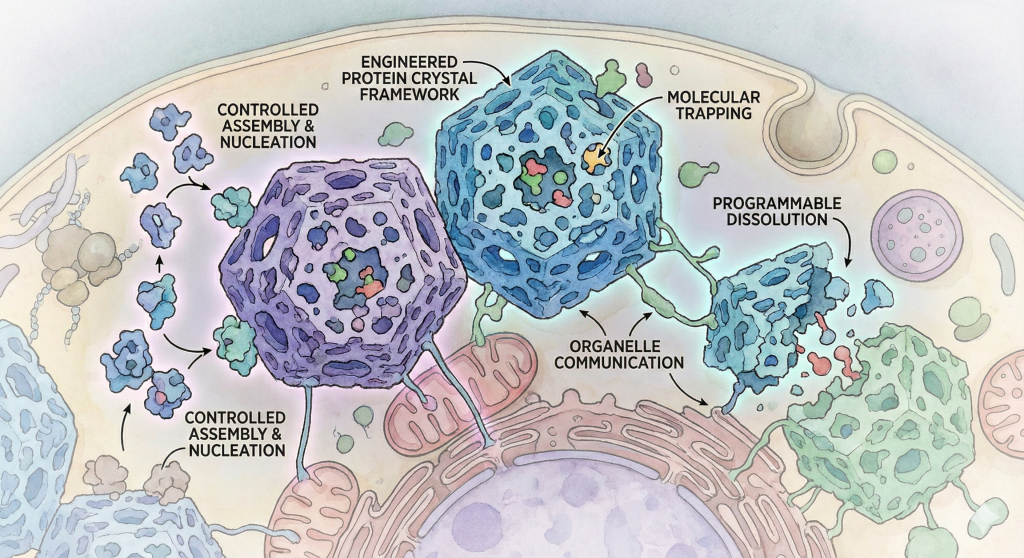
Protein architectures can form inside living cells and act as “nanoscale laboratories”. Our designer protein crystals are genetically encodable, allowing cells to make them on their own. Because they have large internal surface area and pre-specified functional motifs, they can hold on to specific molecules, sense what is happening in the cell, or help carry out useful chemical reactions. We are interested in learning how these crystals form, how we can control when they assemble or dissolve, and how they can be used to store information about a cell’s past. In the future, these intracellular crystals could help scientists monitor cell health, clean up harmful chemicals, or create new ways to engineer cells for medicine and environmental applications.
 Wang Lab